

Kirpan Knife Ban Sparks Division Among UK Sikhs and Politicians Following Stabbing Death
A stabbing death in Southampton has intensified calls to ban the kirpan knife, with Reform Shadow Home Secretary Zia Yusuf leading demands for restrictions.
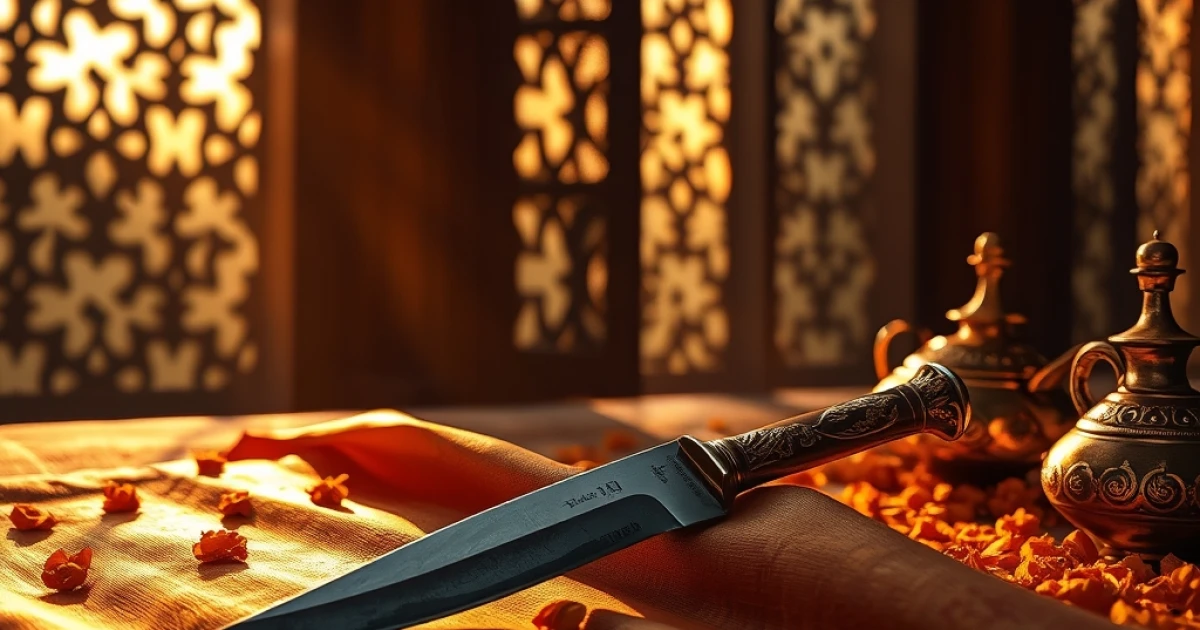
The death of 18-year-old Henry Nowak in Southampton has reignited fierce debate over whether the kirpan knife should be permitted in public spaces across the United Kingdom. Reform politician Zia Yusuf, serving as Shadow Home Secretary, has emerged as the most vocal figure calling for a public ban on the ceremonial blade, while creating unexpected fractures within the Sikh community itself. The case has forced a confrontation between religious freedom, public safety, and policing practices that extends far beyond the weapon itself.
The Case and Political Response
The circumstances surrounding Nowak's death have fueled the controversy. According to reports, the 18-year-old was arrested and handcuffed by police while dying after being accused of racism by his attacker, Vickrum Digwa. The suspect allegedly carried two blades during the incident—a smaller kirpan worn beneath clothing and a larger knife used in the fatal attack. The response by law enforcement, detaining the victim rather than providing immediate aid, has become a focal point for criticism across the political spectrum.
Yusuf has weaponized the case as evidence of what he characterizes as institutional mishandling driven by diversity concerns. He argues that the accusation of racism has become so potent in British society that it effectively insulates perpetrators from accountability. Beyond the kirpan ban proposal, Yusuf has made broader claims about racial victimization, stating that white people now face the most demonstrable forms of racist treatment within Britain.
Sikh Community Divided
Notably, opposition to the kirpan is not exclusively political. Harman Singh, a Sikh restaurateur based in the United Kingdom, has publicly endorsed restrictions on kirpan use in public spaces. Singh has argued that the blade is increasingly being deployed against unarmed civilians, breaking with traditional religious interpretations that frame the kirpan as a symbol of spiritual commitment rather than a practical weapon. His position reflects growing concern within segments of the community about how the weapon is being utilized.
However, this stance remains contested. Other voices within the Sikh community have characterized calls for a ban as a knee-jerk response that unfairly stigmatizes a religious article of faith. The Telegraph has reported opposition to restrictions, framing such measures as discriminatory rather than public safety solutions. This internal disagreement complicates the narrative and demonstrates that the debate cannot be reduced to simple political positioning.
Broader Implications
The kirpan ban debate intersects with broader questions about how Britain regulates religious expression, religious items, and public safety. The case has also drawn comparisons to another controversy involving Manchester Airport attackers being spared a retrial, which Yusuf cited as evidence of systemic inequities. These overlapping incidents have become ammunition in arguments about criminal justice, institutional bias, and the boundaries of tolerance within multicultural Britain.
What is a kirpan and why do Sikhs carry one?+
Who is Zia Yusuf and what authority does he hold?+
Are calls for a kirpan ban supported across the Sikh community?+
What did police do in the Henry Nowak case that became controversial?+
Could a kirpan ban actually be implemented in the UK?+
Bülten Aboneliği
Haftada bir, teknoloji ve dijital dünyadan seçtiklerimiz e-postanda. Spam yok, sadece içerik.