
NASA's Curiosity Mars Rover Discovers Vast Field of Polygonal Fractures in Valle Grande Valley
NASA's Curiosity Mars rover has discovered an extensive field of honeycomb-like polygonal fractures in Valle Grande valley.
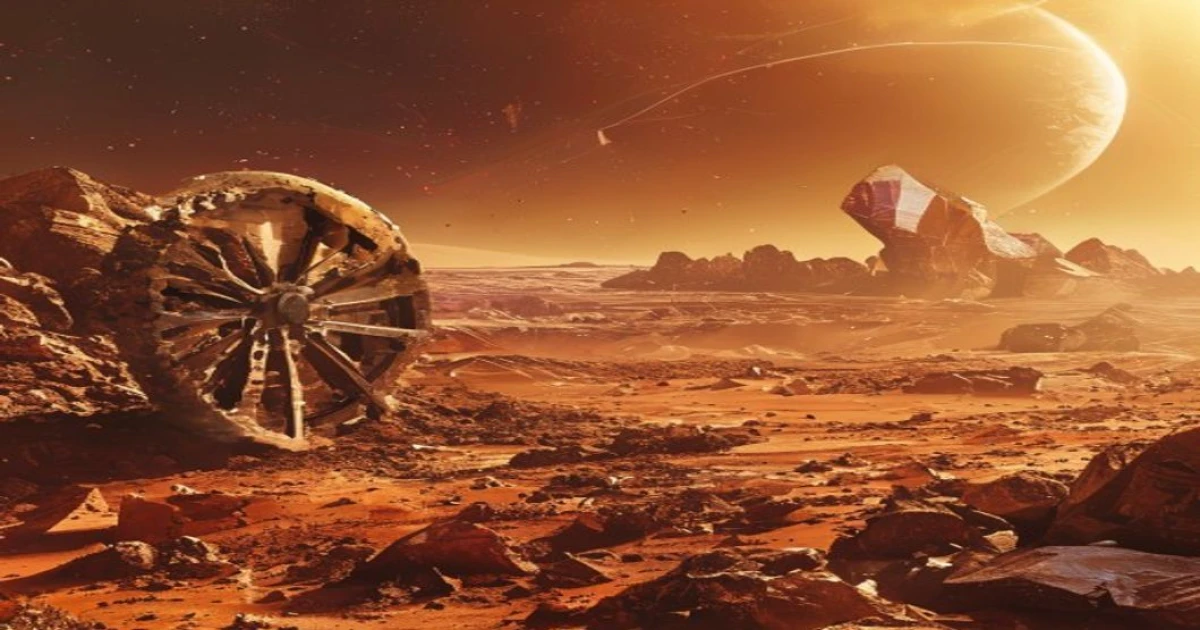
NASA's Curiosity rover has identified an expansive field of geometric honeycomb patterns in a Martian valley, with individual polygons measuring 1.5 to 3 inches across. The discovery in Valle Grande valley suggests evidence of ancient water activity and geological processes that shaped Mars' surface billions of years ago. The rover captured panoramic images of the formation across two consecutive Martian days in mid-June, revealing patterns that extend as far as its cameras can see and even wrap around nearby elevated terrain.
The Discovery in Valle Grande
On the 4,930th and 4,931st Martian days of its mission, Curiosity photographed a 360-degree panorama revealing thousands of geometric shapes distributed across the valley floor. The polygonal fractures surround a rock formation nicknamed Miraflores, a butte standing approximately 20 feet tall with a distinctive sand-capped summit. While mission scientists have encountered similar patterns during Curiosity's nearly 15-year tenure on Mars, the scale and density of this particular field represents a significant find that caught researchers by surprise.
Ashwin Vasavada, the mission's project scientist at NASA's Jet Propulsion Laboratory, described the discovery as having "taken our breath away." He emphasized that researchers carefully measured the shapes and analyzed their chemical composition, hoping the data would illuminate how these features developed across vast expanses of the Martian landscape.
Geological Formation and Ancient Martian Environment
Polygonal fractures typically form through multiple geological mechanisms. Some result from mud cracks formed when water-saturated sediment dries and contracts. Others develop through cycles of temperature fluctuation that cause repeated expansion and contraction in the soil, or through compression processes that squeeze moisture out of buried sediment layers. The variety of potential formation methods suggests the need for detailed analysis of Valle Grande's samples to determine which processes dominated in this region.
Curiosity has been ascending Mount Sharp, a 3-mile-tall mountain in the center of Gale crater, since 2014. The rover's instruments have previously detected evidence of Mars' watery past, including organic molecules believed to be precursor compounds to RNA and DNA. These discoveries confirm that ancient Mars possessed the chemical conditions and environmental factors necessary to support microbial life, billions of years before the planet transformed into the cold, arid world observed today.
How long has Curiosity been operating on Mars?+
What causes polygonal fractures to form on Mars?+
What organic molecules has Curiosity discovered on Mars?+
Where is Curiosity currently exploring on Mars?+
What does the discovery of polygonal fractures suggest about ancient Mars?+
Bülten Aboneliği
Haftada bir, teknoloji ve dijital dünyadan seçtiklerimiz e-postanda. Spam yok, sadece içerik.