


NASA's Psyche Spacecraft Captures Stunning Mars Flyby Video During Gravity Assist Maneuver
NASA's Psyche spacecraft captured striking images during its Mars flyby, using the planet's gravity to adjust trajectory toward asteroid Psyche.
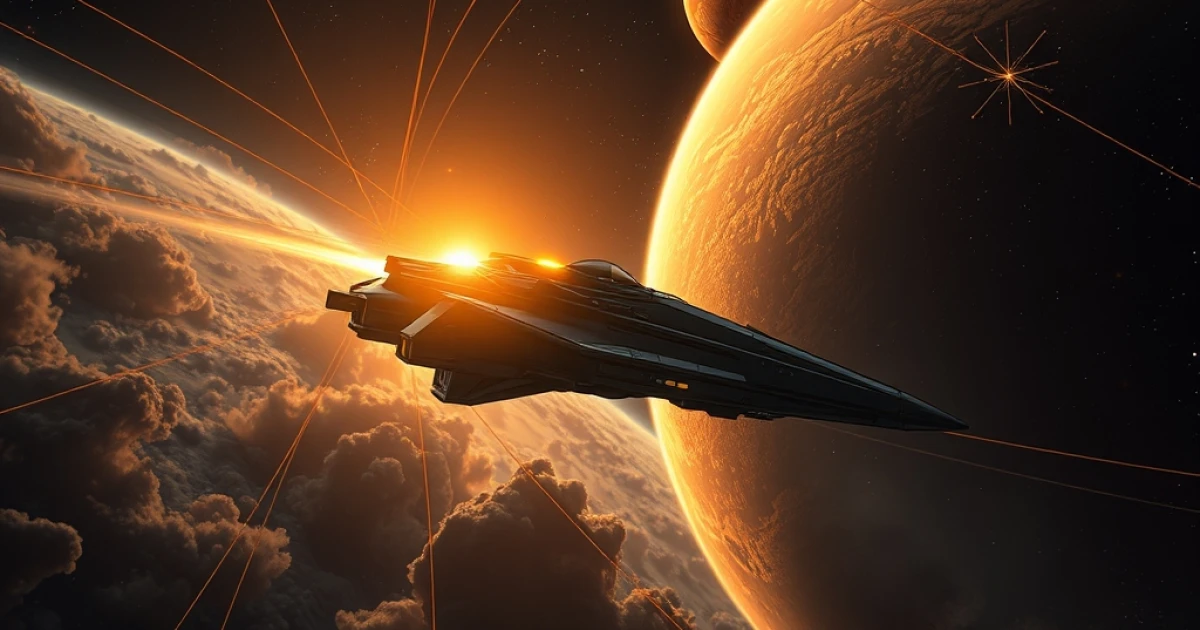
NASA's Psyche spacecraft flew past Mars on May 15, capturing detailed video and imagery of the Red Planet's surface from 2,864 miles away. The maneuver served a dual purpose: using Mars's gravitational pull to propel the spacecraft toward its ultimate destination—the metal-rich asteroid Psyche—while simultaneously testing the mission's full suite of scientific instruments. All equipment performed exactly as engineers designed it to perform.
The Flyby and Its Purpose
Spacecraft traveling across the solar system rarely follow straight paths to their targets. Instead, mission planners schedule gravity assist maneuvers, which harness a large planet's gravitational pull to boost a spacecraft's speed, slow it down, or adjust its trajectory. In this case, Mars provided the necessary gravitational push for Psyche to reach the asteroid belt between Mars and Jupiter, where the metal-rich asteroid Psyche awaits investigation starting in 2029.
The flyby lasted approximately one month, during which the spacecraft transitioned from viewing Mars as a crescent to capturing increasingly detailed surface views. The images reveal notable Martian features, including deep impact craters, the planet's south polar ice caps, and the distinctive double-ringed Huygens crater. These observations occurred as Psyche approached and passed the planet, creating a time-lapse sequence that illustrates the Red Planet from an angle rarely photographed by human spacecraft.
Science Instruments Validated
The encounter doubled as a comprehensive test laboratory for Psyche's scientific payload. The mission's multispectral imager—a pair of cameras designed to photograph asteroid surfaces in different wavelengths of light—captured the Mars images, allowing engineers and scientists to confirm the instruments operated precisely as intended. Beyond the cameras, the gamma-ray and neutron spectrometer also underwent rigorous testing. This spectrometer measures chemical elements on a celestial body's surface by detecting neutrons and gamma rays emitted when cosmic rays bombard the surface. During the closest approach, the neutron spectrometer detected the anticipated count-rate enhancement, demonstrating excellent performance.
The mission's magnetometer, which has been operational since Psyche launched in 2023, similarly performed according to specifications. Lindy Elkins-Tanton, principal investigator for Psyche at the University of California, Berkeley, noted that while scientists did not anticipate major discoveries—given Mars's extensive prior study—the data collected through Psyche's unique perspective complemented existing Martian science. The instruments delivered results matching what NASA already knows about Mars while providing several new insights into the planet's composition and characteristics.
Why did Psyche perform a flyby of Mars rather than traveling directly to the asteroid?+
When will the Psyche spacecraft reach the asteroid Psyche?+
What does the gamma-ray and neutron spectrometer measure?+
What distance did Psyche maintain from Mars during the flyby?+
Why is the Psyche asteroid significant enough to warrant a dedicated mission?+
Bülten Aboneliği
Haftada bir, teknoloji ve dijital dünyadan seçtiklerimiz e-postanda. Spam yok, sadece içerik.