


Rare meteorite that crashed through New Jersey home reveals ancient solar system secrets
Scientists say the discovery provides crucial insights into the early solar system and the chemical conditions that may have enabled life.
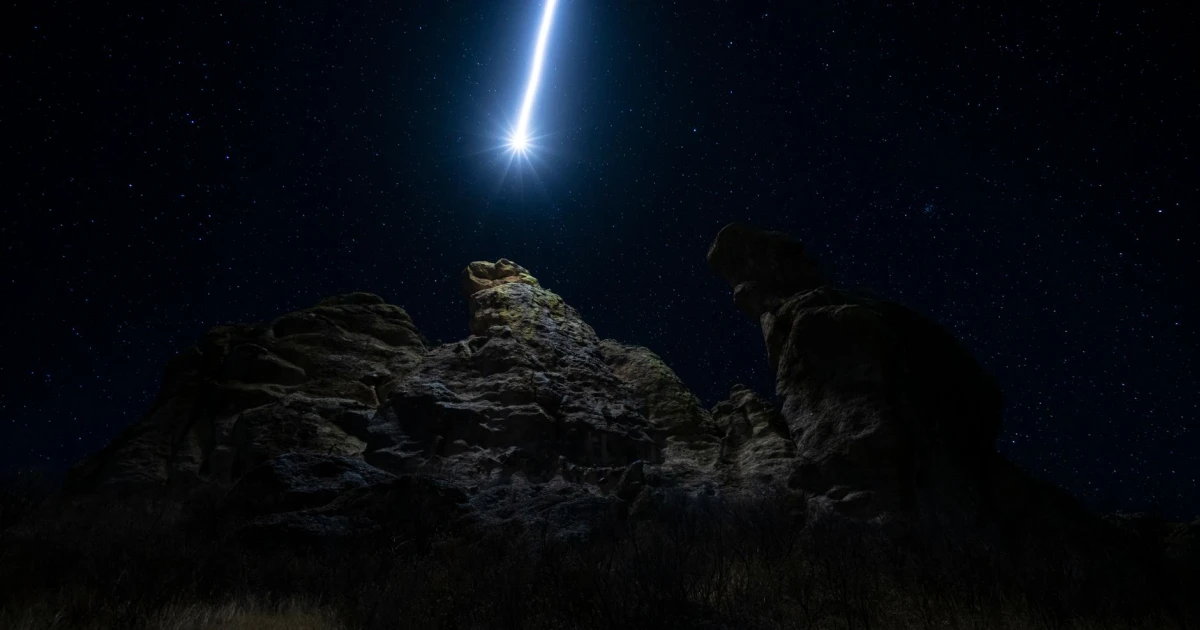
A two-pound meteorite that penetrated the roof of a Hillsborough, New Jersey home in 2024 is a rare, primitive fragment from the early solar system containing amino acids and evidence of ancient water interactions. Scientists analysing the recovered space rock say it offers unprecedented insights into the chemical composition of asteroids and the materials that may have seeded life on Earth.
İçindekiler ›
The Impact and Discovery
On 16 July 2024, observers across New York, New Jersey, Connecticut, Rhode Island and Pennsylvania witnessed a fireball streaking across the daytime sky. The space rock, estimated to be the size of a heavy airline bag, travelled at approximately 32,000 miles per hour as it approached Earth. As the object passed just south of the Statue of Liberty, it generated a sonic boom felt across New York City and New Jersey.
The meteorite fragmented roughly 22 miles above ground due to its particularly fragile composition. A Doppler weather radar at Newark Liberty International Airport tracked a cloud of debris falling from Staten Island into New Jersey. Only one fragment was recovered—the piece that punched through the master bedroom ceiling of the Hillsborough home, causing no injuries to the occupants.
Preservation and Scientific Analysis
The homeowners' immediate response proved critical to the meteorite's scientific value. Using disposable gloves and aluminium foil, they carefully collected black fragments and dust from the bed and carpet into glass jars. They then patched the roof before rainfall that evening—a crucial step because the porous meteorite absorbs moisture from the air, which would have contaminated the sample.
Researchers led by Peter Jenniskens of the SETI Institute and NASA's Ames Research Center published their findings in the journal Science Advances. The analysis revealed that the meteorite contained preserved material from the surface of a primitive asteroid where it had experienced concentrated salty fluids—a process not previously documented in this type of proto-planetary object. Scientists detected a complex suite of rare amino acids, the fundamental building blocks of proteins, in water extracts from the sample. Most of these amino acids are rare or nonexistent in life on Earth, indicating their origin in an alien chemical environment.
Implications for Understanding the Solar System
The discovery provides a window into conditions during the early solar system's formation. The presence of preserved amino acids and evidence of ancient water interactions suggests that asteroids may have carried organic compounds and other materials necessary for life. This finding supports ongoing research into how such materials could have reached Earth and contributed to the emergence of life on our planet.
What makes this meteorite particularly rare?+
How did the meteorite survive impact through the roof?+
Why was patching the roof so important?+
What does this discovery tell us about life's origins?+
How did scientists track the meteorite's origin?+
Bülten Aboneliği
Haftada bir, teknoloji ve dijital dünyadan seçtiklerimiz e-postanda. Spam yok, sadece içerik.