

Thousands Celebrate Summer Solstice at Stonehenge as Parking Reaches Full Capacity
Thousands gathered at Stonehenge near Salisbury to celebrate the summer solstice, the year's longest day. on Sunday to accommodate the solstice celebrations.
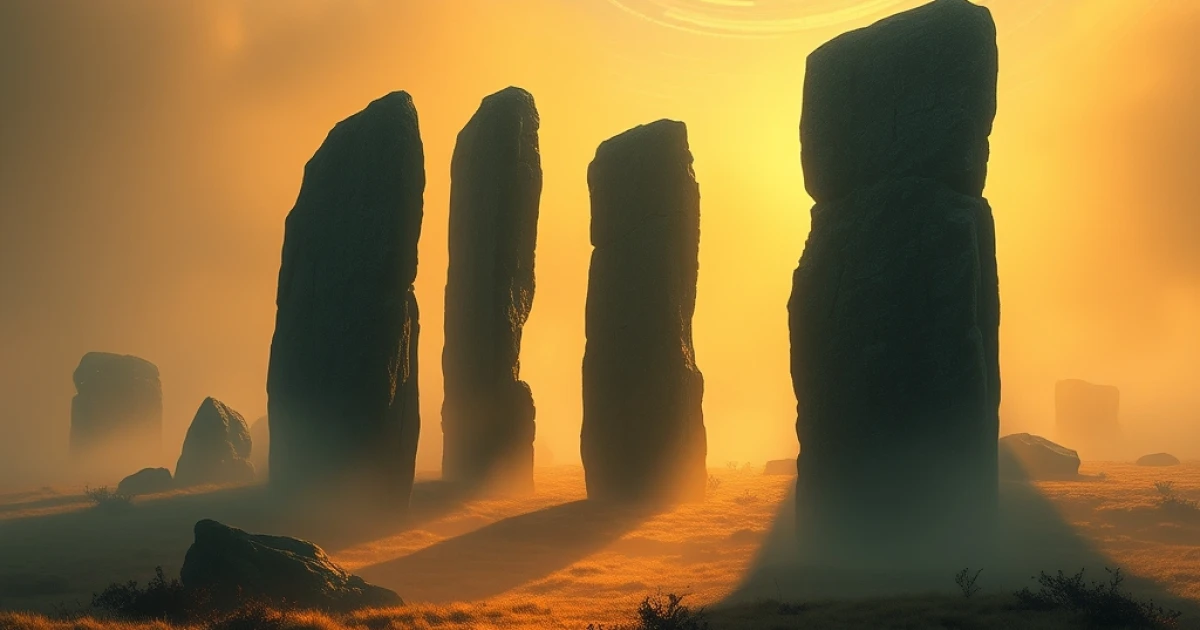
Thousands of visitors descended on Stonehenge to mark the summer solstice, gathering before dawn to witness the sun rise over the ancient stone circle as it aligned with the monument's prehistoric architecture. The event, held near Salisbury in Wiltshire, drew revelers who participated in music, dancing, and quiet reflection to celebrate the year's longest day. English Heritage confirmed that parking for the weekend event had completely sold out, forcing the organization to issue travel guidance for those without tickets.
İçindekiler ›
Record Attendance Strains Local Infrastructure
The scale of attendance prompted English Heritage to implement traffic management measures across the region. Steve Bax, operations director for Stonehenge, stated that the site operated continuously from 7 p.m. on Saturday through 8:30 a.m. on Sunday to accommodate the solstice celebrations. With all available parking exhausted, the organization urged visitors without tickets to abandon plans to drive independently and instead utilize dedicated shuttle bus services operating from Salisbury throughout the weekend.
The shuttle buses provided an accessible alternative, connecting with train and bus services in Salisbury to reduce congestion on small local roads and minimize disruption to residents. Bax emphasized that visitors should not attempt to park in unsafe locations around the site or ignore traffic diversion signs. English Heritage made clear that those arriving without official parking credentials would face difficulty accessing the monument by private vehicle.
Protecting an Ancient Site's Fragile Ecosystem
Beyond logistical concerns, English Heritage highlighted the archaeological and environmental vulnerabilities of the structure itself. Stonehenge, constructed around 2,500 BCE, contains prehistoric carvings and hosts extremely rare lichens on its stone surfaces that sustain damage from direct contact. The organization reminded attendees that touching the stones threatened both these irreplaceable organisms and the carvings themselves, urging visitors to treat the monument with respect for future generations.
The alignment between Stonehenge and celestial events remains central to understanding its original purpose. On the summer solstice, the sun rises behind the Heel Stone and its rays shine directly into the center of the stone circle—a phenomenon believed to have held significance for the Neolithic people who built the monument thousands of years ago. The continuation of solstice celebrations at the site represents an unbroken cultural tradition connecting contemporary visitors to prehistoric ritual practices.
Why does Stonehenge align with the summer solstice?+
How did visitors access Stonehenge without parking?+
Why did English Heritage restrict touching the stones?+
What are the visiting hours for the summer solstice event?+
Is there a charge to attend the summer solstice celebration?+
Bülten Aboneliği
Haftada bir, teknoloji ve dijital dünyadan seçtiklerimiz e-postanda. Spam yok, sadece içerik.