


Was the Trojan War Real? Archaeologists Confirm Ancient City of Troy Existed Through Nine Layers of Ruins
Was the Trojan War real?. The discovery validates the geographic and historical context of one of literature's most influential epics.
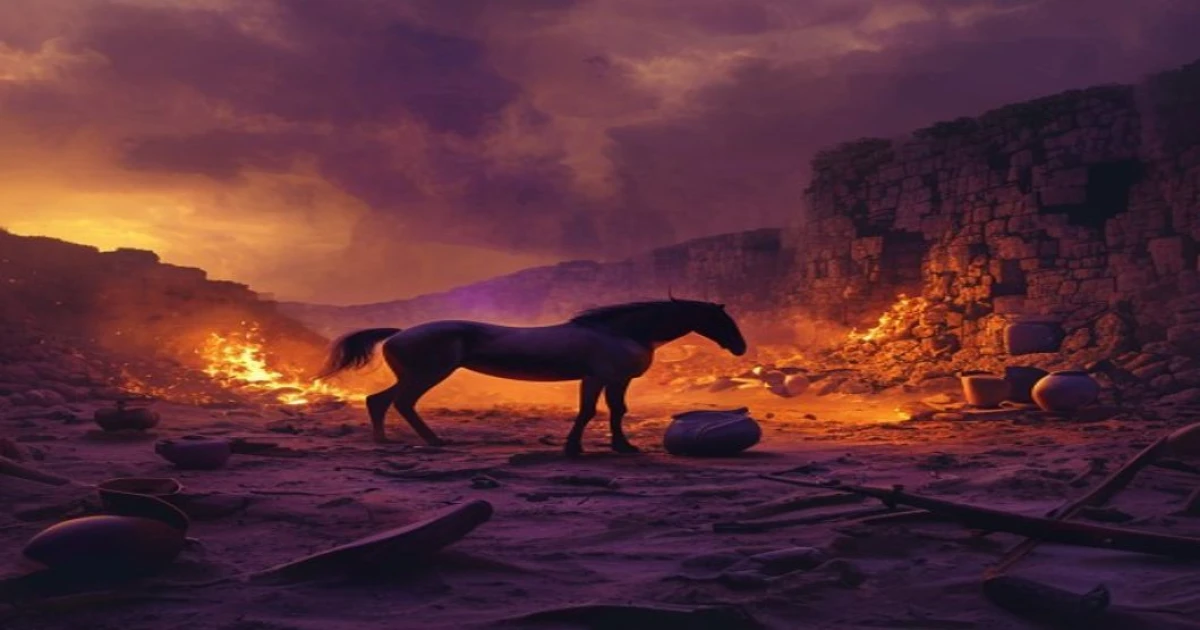
Was the Trojan War real? While Homer's epic account remains partially mythologized, archaeologists have confirmed the existence of the ancient city of Troy itself through extensive excavations at Hisarlik in northwestern Turkey. The nine-layered archaeological site reveals a complex history of settlement, destruction, and rebuilding across multiple civilizations over thousands of years.
The Archaeological Discovery
The hill known as Hisarlik—meaning "place of fortresses" in Turkish—contains the remains of nine distinct cities that rose and fell over the ages. Researchers have assigned numbers to these layers, with Troy 6 and Troy 7 believed to correspond to the timeframe and setting of Homer's Iliad, which describes events leading to the Odyssey. The site was formally recognized as the location of ancient Troy only in recent history, despite the poems' influence on Western civilization for more than 2,000 years.
Professor Rustem Aslan of Canakkale Onsekiz Mart University has dedicated 40 years to excavating the UNESCO World Heritage site. The dig has revealed architectural structures and artifacts that provide physical context for the legendary narratives. Yet as scholar Eric Cline from George Washington University notes, no artifact explicitly states this location is Troy—the identification remains based on geographic, archaeological, and historical correlation rather than definitive inscription.
What Homer's Texts Reveal
The Iliad and Odyssey were originally composed as oral poems before being recorded between the eighth and sixth centuries B.C. Scholars at the Library of Alexandria standardized versions of both texts around the third century B.C., copying them onto papyrus scrolls. Medieval scribes later transcribed these versions into manuscripts that form the basis for modern editions. The poems changed as they were retold and rewritten across regions and centuries, making it difficult to identify a single author or original version.
Modern archaeological interest has expanded beyond the city itself. Thousands of papyrus fragments containing portions of the Iliad and Odyssey have been discovered, particularly from Egyptian excavations dating to the third century B.C. Some fragments were extracted from mummy cartonnage—the decorated plaster casings applied to mummies—revealing how deeply these narratives permeated ancient Greek and Roman cultures.
Experiencing Troy Today
Visitors to the site encounter a towering wooden horse at the entrance and ruins spread across the landscape overlooking the Aegean Sea. The plains surrounding the archaeological hill match Homer's descriptions, including the constant wind he referenced in his verses. Though the coastline has shifted over 2,000 years, the geographic scale and terrain allow modern observers to envision the armies Homer described. The Troy Museum and remaining architectural foundations provide narrative context for understanding how this location was destroyed and rebuilt multiple times across history.
Was the Trojan War actually fought at this archaeological site?+
How many ancient cities were built at Hisarlik?+
When were Homer's Iliad and Odyssey first written down?+
Is Troy still being excavated today?+
Where is the ancient city of Troy located?+
Bülten Aboneliği
Haftada bir, teknoloji ve dijital dünyadan seçtiklerimiz e-postanda. Spam yok, sadece içerik.